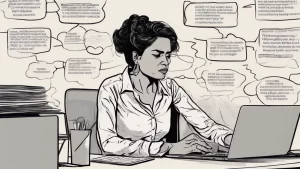
If you care deeply about your work and the world, you may know a particular kind of tired. You sleep, and you still wake up exhausted. You take a weekend off, and by Monday afternoon you’re running on fumes again. You’ve tried the apps, the therapy, and the self-care routines. They helped for a while, and then the fatigue came back.
I’m Amy Ross, an NGH certified hypnotherapist currently in Lisbon. I work with people who carry a lot for others: nurses, teachers, lawyers, social workers, advocates, journalists, and public servants. Many of them have been switched on for years. In this article I want to share a way of looking at that exhaustion that my clients find hopeful, and an experiment you can try this week.
What is human ecology?
Human ecology is the study of how people live in relationship with everything around them. That includes your own body and its natural rhythms, your relationships, your community, and the cultural systems you live inside.
Like any ecosystem, a person can be depleted or tended. When we’re depleted, we become reactive. We snap at people we love, we struggle to focus, and small problems feel huge. When we’re tended, we become resilient. We have room to think, to rest, and to stay curious.
Seeing yourself as an ecosystem changes the question you ask. Instead of “What’s wrong with me?” you can ask “What does this system need to recover?”
The rhythm most of us override
One of the most overlooked parts of your inner ecosystem is the ultradian rhythm. Researchers have described it for decades. Through the day and night, the body moves in cycles of roughly 90 minutes: a stretch of focus and energy, followed by a dip where the body asks for a short period of recovery. The length varies from person to person and day to day.
You’ve felt the dip, even if you’ve never had a name for it. Common signs include:
- Reading the same sentence or email several times
- Yawning, fidgeting, or feeling restless
- A sudden craving for coffee or something sweet
- Forgetting why you walked into a room
- Feeling irritable over something small
Most of us were taught to push through these moments, especially in jobs where people depend on us. A nurse can’t walk away from a patient mid-dip, and a teacher can’t pause a room of 30 kids.
Over months and years, overriding the rhythm becomes a habit. The body gets fewer chances to come back down, and the nervous system starts to treat constant alertness as normal. People often describe it as feeling tired and wired at the same time.
Why this matters beyond you
Here’s the part of this work I care about most. A nervous system that has been on alert for a long time has a hard time listening. When the body senses threat, attention narrows. We stop hearing the other person and start defending our position. We see enemies where there are neighbors.
You can watch this happen at a dinner table, in a staff meeting, and on the national stage. A regulated, resourced person has room to stay curious, to hear someone they disagree with, and to respond instead of react.
I believe peace is built one nervous system at a time. Tending your own ecosystem is a kindness to yourself, and it also makes you a steadier presence for your patients, students, clients, family, and community.
A 10-minute experiment to try this week
You don’t need a retreat to start working with your rhythm. Try this for three days:
- Notice the dip. Watch for one of the signs above.
- Pause for 10 minutes. Step away from screens and look out a window or at something far away. Let your breath slow down, with each exhale a little longer than the inhale.
- Notice what your mind says. Many caring people hear an inner voice that says they haven’t earned a break. You don’t have to argue with it. Notice it with curiosity and rest anyway.
- Notice what changes. When you return, pay attention to your focus, your mood, and your body.
If 10 minutes isn’t possible at work, try 60 seconds: three long exhales, feet pressed into the floor, and your eyes on something far away. Small signals still count.
Where hypnotherapy fits
Hypnosis is a natural state of relaxed focus. You’re awake, aware, and in charge the whole time, and you can open your eyes whenever you want. In that relaxed state it becomes easier to set old habits aside for a moment, imagine responding differently, and then practice it until it feels natural.
In my work, hypnosis gives your nervous system a felt experience of rest. It also lets us work gently with the parts of you that keep pushing, like the part that can’t stop watching the news or the part that feels guilty for resting. These parts usually developed for good reasons. They’re trying to protect you, and hypnotherapy helps them find new ways to do that.
Hypnotherapy is a support, and it works well alongside therapy and medical care. If you’re living with depression, trauma, or a health condition, keep working with your doctor or therapist too.
BUILD TO LAST: HUMAN ECOLOGY
If this way of looking at yourself makes sense, I’ve created a four-week live group program for people who care deeply and are tired of running on empty. It’s called BUILD TO LAST: HUMAN ECOLOGY.
Over four weeks we explore your inner ecosystem, understand the loop of constant alertness, build a daily practice that fits your real life, and finish with your own personal ecology map. Each week includes one live 60-minute Zoom session and a short hypnotic audio to listen to between sessions, plus a private community for support.
Cohort 1 runs November 16 to December 13, 2026. Registration closes November 13, and the first 10 people receive an early bird price. [Learn more and register]
Frequently asked questions
What is the ultradian rhythm?
The ultradian rhythm is a natural cycle the body repeats through the day and night, roughly every 90 minutes. Each cycle includes a period of higher focus and energy followed by a short dip when the body is primed to rest and recover.
Is burnout a nervous system problem?
Burnout has many causes, including workload, staffing, and the environment you work in. Long-term stress also affects the nervous system, and many people find that supporting their nervous system helps them recover and cope with the pressures they can’t change right away.
Can hypnotherapy help with burnout and chronic stress?
Many people find hypnotherapy helpful for stress and the patterns underneath burnout, such as guilt about resting or constant alertness. Results vary from person to person, and hypnotherapy works best as a support alongside medical and mental health care.
Does online hypnotherapy work?
Yes. Virtual sessions work well, and many people find it easier to relax in their own space. All you need is a quiet place where you can focus and a reliable internet connection.
What is human ecology in simple terms?
Human ecology looks at how a person lives in relationship with their body, their relationships, their community, and the wider culture. It treats each person as a living system that can be depleted or tended.
Try the 10-minute experiment for three days, then leave a comment or send me a message and tell me what you noticed. I’d love to hear it.